
Learn a concept
“What is a stablecoin?”
An educational articleRead the published example
Explain the fundamentals clearly, then connect the reader with related concepts and product context.
I built Kite’s search strategy around customer intent, using articles, localized landing pages and an interactive glossary.
Observed sitewide growth from a small baseline, not isolated lift from one initiative.
With the website foundations in place, Kite needed to build early search momentum around the needs of its prospective customers.
That meant prioritizing attainable opportunities, choosing the right page format for each search, and making unfamiliar crypto concepts easier to understand.
I researched competitor rankings and attainable opportunities, then prioritized the searches that matched Kite’s audience and product capabilities.
Explain the fundamentals clearly, then connect the reader with related concepts and product context.
Bring availability, relevant uses and the next step into one destination, matched to the market and audience.
Give a direct answer, translate it into familiar banking language and make related terms easy to explore.
Questions illustrate search intent. Content format was a strategic choice; a landing-page-versus-blog conversion uplift was not measured.
I built an interactive glossary to help people understand language they encounter in the app, on the website or elsewhere in crypto.
One connected resource for readers, editors and search engines.
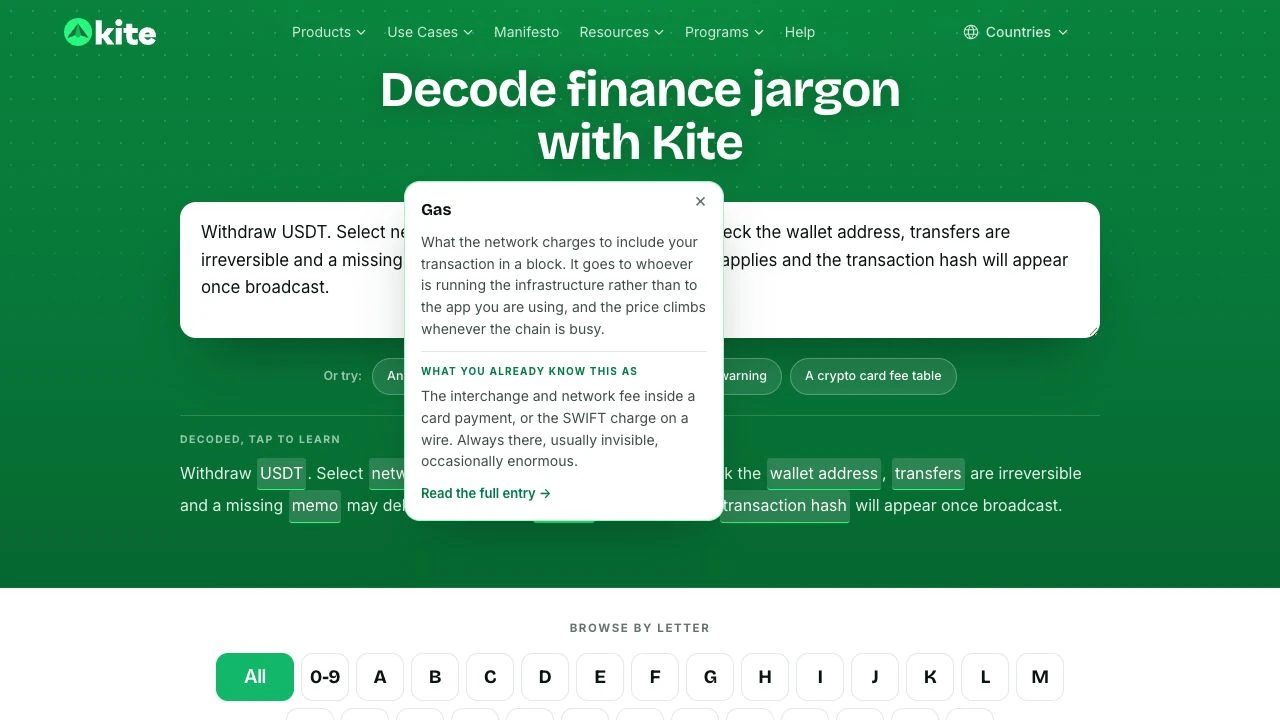
Paste a phrase, see the recognized terms highlighted and explore definitions without losing the original sentence.
Each term pairs a clear crypto explanation with a familiar banking equivalent for people coming from traditional finance.
A searchable index, individual crawlable pages, related terms and contextual article links make the resource easier to discover.
Search Console and GA4 show growing visibility and the first measurable journeys toward the app. These are sitewide observations, not isolated lift from one initiative.
Relative to July 2026 · Full calendar months
* September: follow-through after the main engagement.
Google Search clicksJuly to August 2026
Google Search impressionsJuly to August 2026
GA4 recorded app-store clicks from organic search and visits through its AI Assistant channel.
Tracked interactions and referrals, not confirmed installs or AI citation counts.
3.9× as many term pages appeared in the returned search data in September as in August.
* September is follow-through after the main engagement ended on 1 September. Growth is from a small baseline. Page-level data includes glossary hubs; term-page comparisons exclude them.
The early search footprint was largely homepage-led. The glossary’s page-level data shows additional discovery starting to emerge, with September presented separately as follow-through.
Source: Google Search Console & GA4.
Retrieved 11 October 2026.
| Month | Clicks | Impressions |
|---|---|---|
| June | 0.47× | 0.47× |
| July | 1× | 1× |
| August | 1.68× | 1.59× |
| September* | 2.79× | 5.23× |
Full calendar months, domain-wide final data. Each metric is divided by its July value; multiples are rounded. July-to-August changes are calculated from the underlying values before rounding. * September follows the main engagement ending on 1 September.
| Month | Impressions | Term pages* |
|---|---|---|
| August | 1× | 1× |
| September | 16.93× | 3.90× |
* Relative change in distinct term paths with impressions in returned API rows, excluding hub, letter and pagination pages. Impression comparisons include the glossary hub and descendants. The API returns available top rows, not a complete index inventory; page-level impression sums are not additive to domain totals. Each September measure is divided by its August baseline.
I led the search and content strategy, glossary experience, content models and implementation workflows. Kite’s team contributed to production adoption and the wider marketing effort. Sitewide observations include branded and non-branded demand and cannot establish the causal contribution of a single person or initiative.
GA4 measures sessions by its reported channel classification. Organic Search sessions and app_store_click events describe traffic and interactions, not customers or confirmed app installs. AI Assistant sessions are referral observations, not AI citation share or recommendation frequency.
GA4 was being established in early July, so July-to-August GA4 growth is not used as a headline. Glossary delivery records verify 197 terms by 1 September and 76 contextual links across ten articles in August. No measured domain-authority score change is claimed.
THE OTHER SIDE OF THE WORK
Kite / GTM readinessFrom showcase website to launch-ready marketing.WORK WITH ME
Let’s connect what your customers search for with content, pages and useful tools your business can own.
Discuss your projectSend me your website and what you want to achieve.
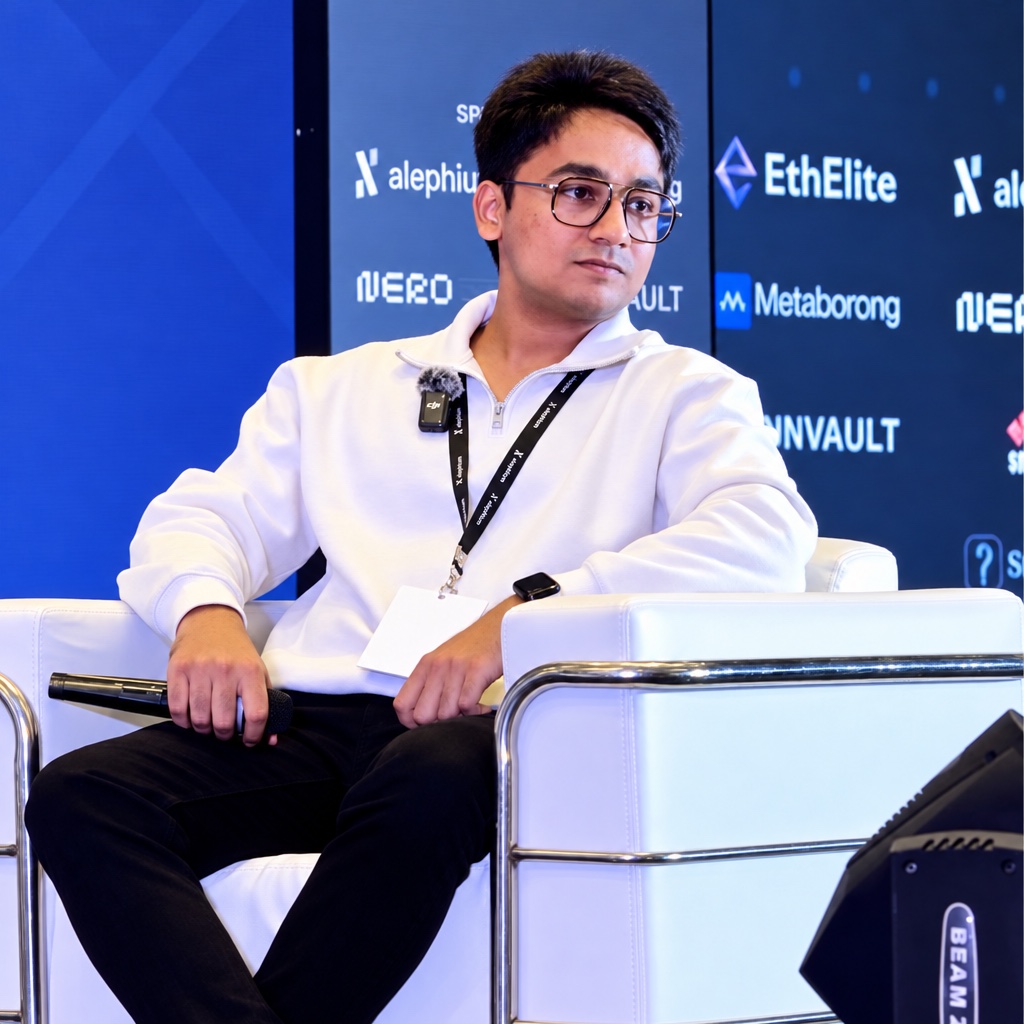
SankritSEO & AI Search Specialist